
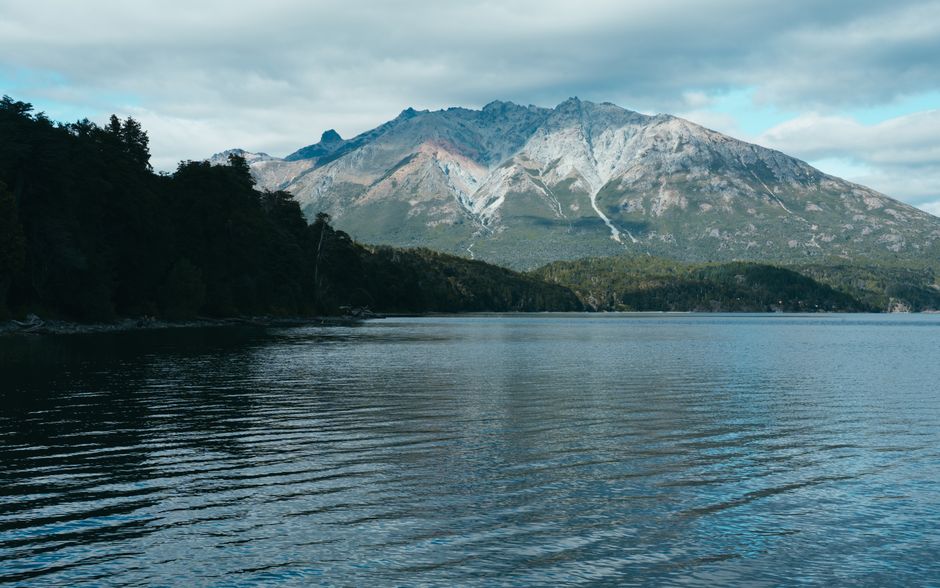
You booked the flight to Punta Arenas. You told your friends you are doing the W Trek. Then you open a map of Torres del Paine and realize you have no idea where to sleep, what permits you need, or why every campsite name is in Spanish and costs more than your hostel in Santiago. That confusion is normal. The planning phase for a Patagonia trek is harder than the walking itself.
I have watched people fly 5,000 miles only to get turned away at the park gate because they did not have a confirmed campsite reservation. That is a real failure mode. This guide walks through the exact sequence of decisions you need to make, in order, with current prices and permit rules. No fluff.
1. Pick Your Trek Based on Infrastructure, Not Just Scenery
Patagonia splits into two trekking zones with very different logistics. The Torres del Paine W Trek in Chile has refugios (mountain lodges with beds and hot meals), designated campsites, and a reservation system run by three private companies. The Huemul Circuit near El Chaltén, Argentina, has no huts, no reservations, and requires carrying a rope to tyrolean across a river. Same region, completely different planning burden.
For a first multi-day trek, the W Trek is the answer. Not because it is easier walking — it is not — but because the failure modes are fewer. You can buy a hot dinner. You can rent a sleeping bag. You can bail out at a refugio if weather turns. The Huemul Circuit is for people who already know how to read a river crossing and have done at least one unsupported multi-day before.
W Trek Basics: Distance and Time
The W Trek runs roughly 76 kilometers (47 miles) over 4 to 5 days. Elevation gain is modest by Andean standards — around 2,500 meters total — but the wind is the real cost. Sustained 80 km/h gusts are common in summer. You will walk slower than you think.
Huemul Circuit: The Harder Alternative
The Huemul is 65 kilometers over 4 days, but it includes two tyrolean traverses, glacier travel, and zero resupply points. If you are asking “what is a tyrolean traverse,” you are not ready for the Huemul. That is not gatekeeping. That is the park ranger in El Chaltén telling you the same thing when you register.
2. The Permit and Reservation System Is the Real Gatekeeper
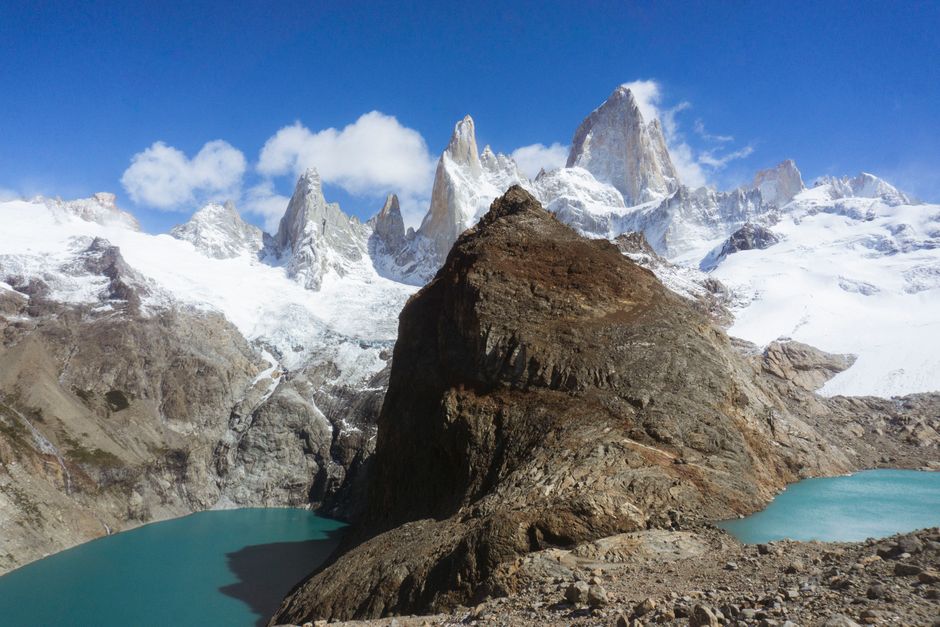
You cannot just show up at Torres del Paine and start walking. Since 2016, CONAF (Chile’s forest service) requires every overnight visitor to have confirmed reservations for every single night inside the park. Rangers check at entry. No reservation, no entry. No exceptions for bad weather or sad faces.
This is the number one reason first-time trekkers fail. They book flights, then discover all campsites are full for their dates. For the 2026 season (October to April), the popular refugios like Refugio Grey and Refugio Paine Grande sell out 4 to 6 months ahead for December and January slots.
Who Runs What Inside Torres del Paine
Three companies control almost all accommodation inside the park: Vertice Patagonia (Paine Grande and Grey), Las Torres Patagonia (Central, Chileno, and Serón), and Fantástico Sur (Francés and Cuernos). You must book directly through their websites or through a licensed tour operator. There is no central government booking portal. This fragmentation is why planning feels chaotic.
What a Reservation Actually Costs
Campsite prices for 2026 season run between $25 and $55 USD per person per night for a basic tent platform with no services. A full bed in a shared dorm at a refugio runs $90 to $150 USD per night. Add meal packages and you are looking at $180 to $250 USD per day per person if you go the comfort route. Budget trekkers carrying their own tent and food can get that down to $70 to $90 USD per day.
If you want to avoid the reservation mess entirely, consider the Cerro Castillo Trek in Chile’s Aysén region. It is a 4-day, 50-kilometer route with free or cheap campsites and no reservation system. The scenery rivals anything in Torres del Paine. The tradeoff: you must carry all food and there are no huts.
3. Gear That Fails in Patagonia Specifically
Patagonia breaks gear in predictable ways. The wind snaps tent poles. The rain — horizontal, driven at 60 km/h — finds every seam. The UV at 50 degrees south burns through cheap sunglasses. Your gear list matters more here than on the Appalachian Trail or the Tour du Mont Blanc.
The Tent Problem
Do not bring an ultralight trekking pole tent unless you know how to pitch it in 80 km/h gusts. The MSR Hubba Hubba NX ($480) and Big Agnes Copper Spur HV UL2 ($500) are the two most common tents on the W Trek. Both handle wind well if you stake out every guyline and use rocks as deadmen anchors. The Zpacks Duplex ($700) is lighter but flattens in Patagonian wind unless you are an expert. For a first trek, bring a freestanding tent.
The Rain Jacket That Is Not a Rain Jacket
“Water-resistant” means nothing here. You need a 3-layer hardshell with taped seams. The Arc’teryx Beta LT ($450) and Patagonia Torrentshell 3L ($180) both work. The Torrentshell is the better value. Pair it with rain pants — not water-resistant hiking pants, actual rain pants like the Marmot PreCip Eco ($100). Wet legs in 5°C wind is how hypothermia starts.
Boots vs Trail Runners
This is the most argued topic in Patagonia trekking forums. My position: for the W Trek in summer, waterproof trail runners like the Salomon X Ultra 4 GTX ($160) are enough. The trails are well-maintained. For shoulder season (October, April) or any route with snow, wear leather boots like the Scarpa Zodiac Plus GTX ($300). The mud is real, but it is not deep enough to justify heavy boots in summer.
4. A Realistic Budget Breakdown
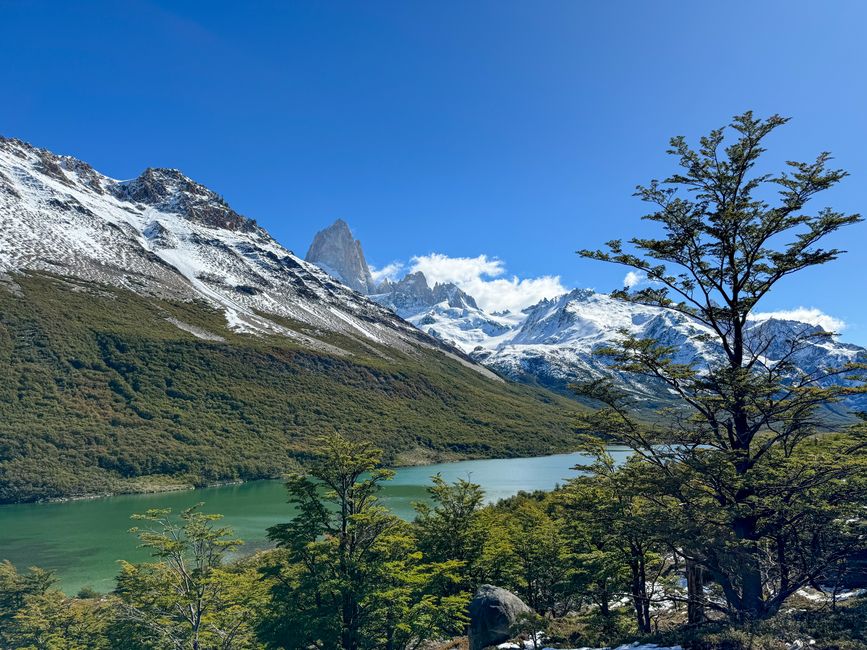
Patagonia is not Southeast Asia. You cannot show up with $30 a day and make it work. Here is a realistic per-person budget for a 5-day W Trek in 2026, excluding international flights.
| Category | Budget Option | Comfort Option |
|---|---|---|
| Park entry (CONAF fee) | $49 | $49 |
| Campsites (4 nights) | $120 | $0 (refugio beds instead) |
| Refugio beds (4 nights) | $0 | $480 |
| Food (carried) | $60 | $0 (meal plan) |
| Meal plans (4 days) | $0 | $240 |
| Bus Puerto Natales to park | $30 | $30 |
| Catamaran crossing | $35 | $35 |
| Gear rental (if needed) | $80 | $80 |
| Total (excluding flights) | $374 | $914 |
The gap between budget and comfort is $540. That is a flight from Santiago to Punta Arenas. Most first-timers land somewhere in the middle — carrying their own tent but buying hot dinners at refugios. That runs about $500 to $600 for the 5 days.
If that number makes you pause, the Cerro Castillo Trek costs about $120 total for 4 days including bus from Coyhaique. Same Patagonia, one-third the price. The tradeoff is no huts and no safety net.
5. When NOT to Go: The Wind and Crowd Problem
January is the worst month to trek in Patagonia. The weather is statistically best, which means every trail is packed and every campsite is full. You will wait in line for the Mirador Las Torres viewpoint. You will hear people playing Bluetooth speakers at Refugio Chileno. The experience degrades.
But the real problem is wind. Patagonia’s wind peaks in December and January. Sustained 100 km/h gusts are not rare. Tents get destroyed. The O Trek’s John Gardner Pass closes for days when winds exceed 90 km/h. You can lose trekking days to weather even in “good” season.
The better windows: late February to early March or late October to early November. Crowds drop by half. Wind is still present but less violent. The tradeoff is colder nights and a higher chance of snow on passes. For a first trek, March is the sweet spot. The refugios are still open, the trails are quieter, and autumn color hits the lenga forests.
6. The Day-by-Day W Trek Plan That Actually Works
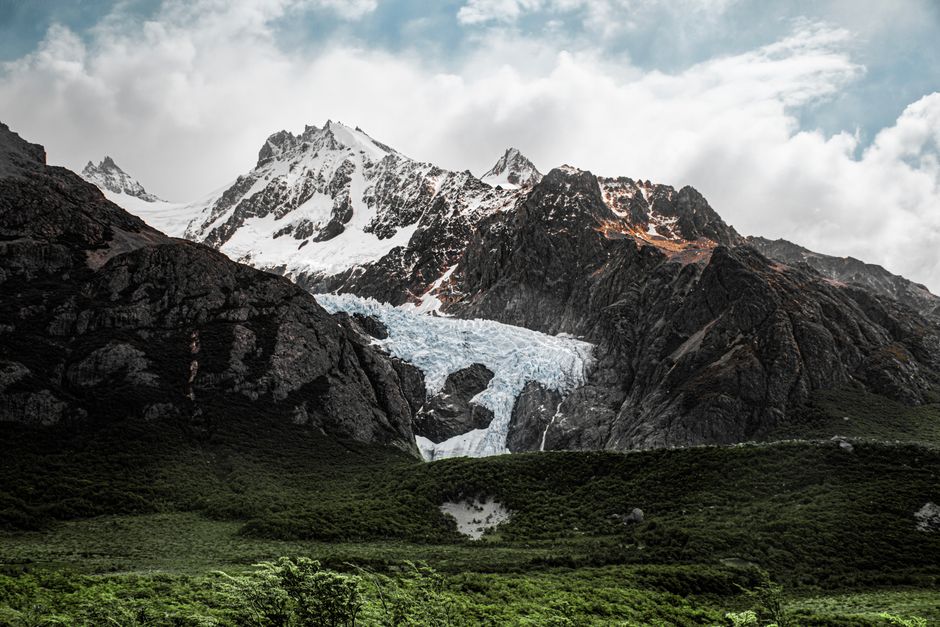
Most people walk the W Trek west-to-east, starting at Paine Grande and ending at Las Torres. This direction puts the prevailing wind at your back for the long valley sections. Here is the 5-day version that avoids the common mistake of overreaching on day one.
Day 1: Bus, Catamaran, and the Grey Glacier
Take the 7:00 AM bus from Puerto Natales ($15 each way with Bus Sur or Buses Gómez). Arrive at Pudeto around 9:30 AM. Take the catamaran across Lake Pehoé ($35, cash only). Start walking from Paine Grande to Refugio Grey. This is 11 kilometers, about 3.5 hours. You finish at the Grey Glacier lookout by late afternoon.
Day 2: Grey to Paine Grande
Retrace your steps back to Paine Grande. This feels redundant but it is how the W works — the trail is an out-and-back to Grey. 11 kilometers, 3.5 hours. Use the afternoon to rest or take the short walk to the Mirador del Valle Francés.
Day 3: The French Valley
Paine Grande to Campamento Italiano is 7.5 kilometers. Drop your pack at Italiano (free ranger station, no services) and climb to Mirador Británico. The round trip from Italiano to Británico is 11 kilometers and 800 meters of elevation gain. This is the hardest day. Total distance: 26 kilometers. Most people underestimate this day. Start at 7:00 AM.
Day 4: Italiano to Refugio Chileno
Walk from Italiano to Refugio Chileno via the Cuernos trail. 15 kilometers, 5 hours. This section has the best views of the Cuernos del Paine. Stay at Chileno or Campamento Torres so you are close to the final sunrise climb.
Day 5: The Towers at Sunrise, Then Out
Leave Chileno at 4:00 AM with a headlamp. The climb to Mirador Las Torres takes 1.5 to 2 hours. You arrive for sunrise around 6:30 AM. This is the payoff. Descend to the park entrance and catch the afternoon bus back to Puerto Natales.
This plan works because it front-loads the easiest day and saves the hardest climb for when your legs are strongest. The most common mistake is doing the French Valley on day 2 when you are still tired from travel.
7. The One Verdict That Matters
For a first multi-day trek in Patagonia, do the W Trek in March. Book your campsites through Vertice and Las Torres Patagonia 5 months ahead. Carry your own tent and food to keep costs under $500. Bring a freestanding tent and a real 3-layer rain jacket. Skip the Huemul Circuit until you have done at least one unsupported multi-day elsewhere.
That is the plan. The wind will still humble you. The towers will still make you forget the cost. But you will not be the person crying at the park gate with no reservation.
This is not financial advice. It is trekking advice, which is worse because the consequences involve blisters and hypothermia instead of just losing money.