
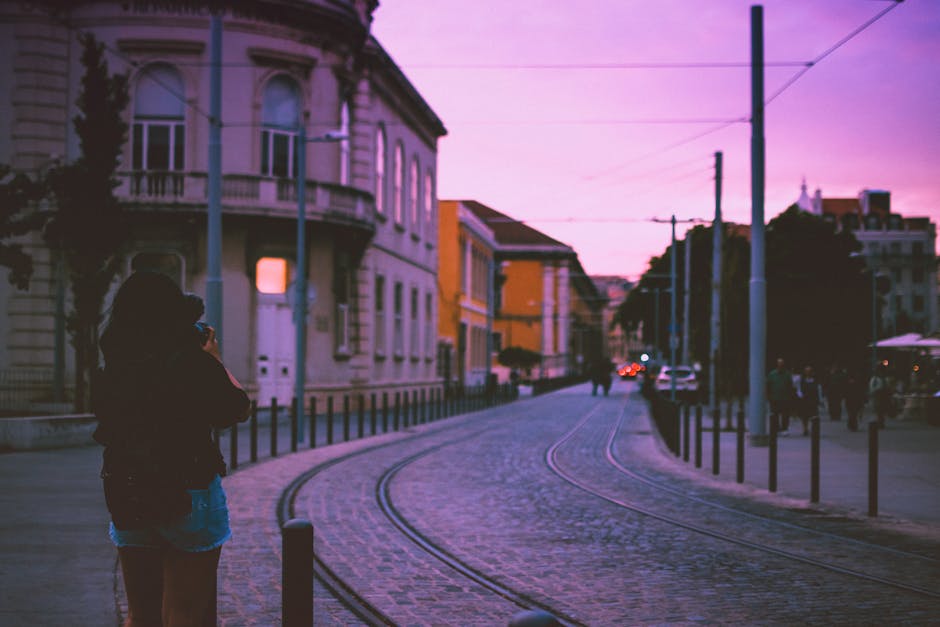
Let’s clear something up right away: your 50mm lens is not just for portraits. Seriously. I’ve heard this misconception a thousand times, usually from photographers just starting out or those stuck in a zoom lens rut. They see the beautiful bokeh, and suddenly the ‘nifty fifty’ gets pigeonholed. That’s a massive disservice to one of the most versatile pieces of glass you can own, especially when you’re traveling.
I’ve shot entire trips with nothing but a 50mm, from the bustling markets of Marrakech to the quiet canals of Venice. It’s a lens that forces you to engage with your environment, to think about composition, and to move. That’s a good thing. It makes you a better photographer, period. Forget the idea that you need a wide-angle for landscapes or a telephoto for street. The 50mm can do it all, and often, it does it with more character and intentionality.
Why Your 50mm Isn’t Just for Portraits (and Why That’s a Good Thing)
People often fixate on the shallow depth of field a fast 50mm offers, thinking it’s only useful for isolating subjects with creamy backgrounds. While it excels at that, its real magic for travel photography lies in its ability to mimic human vision. It’s not too wide, not too telephoto. It’s just… natural.
When you’re packing light for a trip, every ounce matters. Carrying a single prime lens instead of a bulky zoom kit simplifies everything. You stop obsessing over focal lengths and start focusing on light, moment, and emotion. The fixed perspective forces you to move your feet, which means you’re actively exploring and finding unique angles rather than just standing in one spot zooming in and out. That engagement translates directly into more compelling photographs.
The ‘Nifty Fifty’s’ True Field of View
A 50mm lens on a full-frame camera provides a field of view that’s very close to what our eyes perceive naturally. This makes it an incredibly intuitive lens to compose with. You see something interesting, raise your camera, and the frame often feels ‘right.’ It’s not distorting wide-angle lines or compressing perspectives like a telephoto. This natural perspective is invaluable for capturing scenes that feel authentic and immersive.
On an APS-C crop sensor camera, a 50mm lens becomes roughly equivalent to a 75mm or 80mm field of view. While this leans more towards portraiture or tighter street shots, it’s still fantastic for isolating details in crowded markets, capturing architectural elements, or getting tight environmental portraits without being right in someone’s face. Don’t let the crop factor deter you; it just means you have a slightly different, but equally powerful, tool.
Forcing You to See Differently: Composition Benefits
With a zoom lens, it’s easy to get lazy. You stand still and let the lens do the work. A 50mm doesn’t allow that. If you want a wider shot, you step back. If you want a tighter detail, you move closer. This physical interaction with your subject and surroundings is a fundamental aspect of good photography. You start noticing foreground elements, leading lines, and how light falls on your subject because you’re actively seeking the best position.
It teaches you discipline. You learn to frame scenes precisely, to wait for the right moment, and to simplify your compositions. This skill, once honed with a 50mm, will improve your photography no matter what lens you eventually pick up. It’s a masterclass in seeing.
Avoid These 50mm Travel Photography Pitfalls

I’ve been there, making every mistake in the book. Learning to truly love and use a 50mm for travel means unlearning some bad habits. Here are the big ones I see, and how to sidestep them.
Mistake #1: The ‘Zoom with Your Feet’ Trap
Everyone says "zoom with your feet" when talking about primes. And yes, you should. But don’t just mindlessly walk closer or further. Be *intentional*. Don’t just take one step back; take five, see how the background changes, how the elements arrange themselves. Get low, get high. Climb that wall (safely!).
- Problem: You take one photo, realize it’s not wide enough, step back a foot, take another. Repeat.
- Solution: Before you even raise the camera, pause. Look around. What’s the wider context? What’s the intimate detail? Where’s the best light? Try a few drastic moves before settling on your final composition.
Mistake #2: Aperture Priority Overthinking
A fast 50mm (f/1.8, f/1.4) is tempting to shoot wide open all the time. "Bokeh for days!" you think. But f/1.8 isn’t always the answer. A super shallow depth of field can often detach your subject from its environment, which is problematic when that environment is the whole point of your travel photos. You want to remember the bustling market, not just a blurry person in front of it.
- Problem: Every photo is shot at f/1.8, leading to disconnected subjects.
- Solution: Vary your aperture. For environmental portraits or street scenes, try f/4 or f/5.6. You’ll still get some subject separation, but enough context remains to tell the story of your location. Save f/1.8 for specific details or true portraits.
Mistake #3: Forgetting the Foreground
With a 50mm, it’s easy to focus on your main subject and ignore what’s happening right in front of you. But adding a foreground element can dramatically improve your composition, adding depth and leading the viewer’s eye into the scene.
- Problem: Flat compositions, lack of depth in your travel scenes.
- Solution: Look for elements to frame your shot: a tree branch, a doorway, a street vendor’s cart. Get close to it, use it to add layers to your image. This is especially powerful with a 50mm’s perspective.
Prime 50mm Lens Comparison for Globetrotters
Choosing a 50mm for travel comes down to balancing cost, weight, and aperture. You’re not looking for the absolute sharpest lens in the world; you’re looking for a reliable workhorse that won’t break your back or your bank.
I’ve used several over the years, and for most travelers, especially those on a budget or trying to pack light, the "nifty fifty" options from major brands are unbeatable value.
| Lens Model | Typical Price (USD) | Aperture | Weight (approx.) | Key Benefit for Travel |
|---|---|---|---|---|
| Canon EF 50mm f/1.8 STM | $125 | f/1.8 | 160g (5.6 oz) | Incredibly light, cheap, sharp. Ideal for Canon DSLR users. |
| Nikon AF-S NIKKOR 50mm f/1.8G | $220 | f/1.8 | 185g (6.5 oz) | Excellent optics, reliable AF for Nikon DSLRs. |
| Sony FE 50mm f/1.8 | $250 | f/1.8 | 186g (6.6 oz) | Compact and affordable for Sony E-mount mirrorless. |
| Canon RF 50mm f/1.8 STM | $199 | f/1.8 | 160g (5.6 oz) | Lightweight, fast AF for Canon RF mirrorless systems. |
Why Weight and Size Are Your True North
When you’re trekking through a city or hiking a mountain trail, every gram counts. The difference between a 160g lens and a 400g lens might not seem like much on paper, but after a full day of shooting, your neck and shoulders will thank you. The beauty of these budget 50mm lenses is their featherlight construction. They’re often mostly plastic, which helps keep the weight down significantly.
A smaller lens also means a less conspicuous setup. Blending in is key for good travel photography, especially street photography. A tiny 50mm on a mirrorless body or even a smaller DSLR is far less intimidating than a huge zoom lens, making people more comfortable and allowing for more candid shots.
Aperture: More Than Just Blurry Backgrounds
While a wide aperture like f/1.8 is fantastic for subject isolation and low-light performance, it’s not the only consideration. All the lenses above perform well at f/1.8, but stopping down to f/2.8 or f/4 often yields even sharper results across the frame. For travel, this flexibility is crucial.
Having that wide f/1.8 aperture means you can shoot indoors, at dusk, or in poorly lit environments without cranking your ISO to extreme levels. This allows for cleaner images with less noise, a significant advantage when you can’t always control the lighting conditions on the road. Don’t underestimate the power of being able to shoot handheld in low light.
Harnessing Natural Light with Your Fixed Focal Length

The 50mm lens, with its natural perspective and often wide aperture, is an absolute joy to use when you understand natural light. It’s not about expensive strobes or complicated setups; it’s about seeing the light that’s already there and knowing how to make it work for you. This is where the fixed focal length really makes you a more attentive observer.
Forget the idea that you need fancy gear to get stunning travel photos. A simple 50mm and a keen eye for light will outperform a beginner with a pro-level kit any day. It’s about sensitivity to your environment.
Golden Hour Magic: Maximizing Bokeh and Warmth
Ah, golden hour. That magical time just after sunrise and before sunset. With a 50mm, this is where you truly shine. The low, warm light creates incredible dimension and long, soft shadows. Use your wide aperture here, like f/2.8 or even f/1.8, to create beautiful bokeh, especially when shooting portraits or details against a distant city skyline. The natural warmth of the light will make skin tones glow and landscapes pop.
Position your subject so the light hits them from the side or slightly from behind (backlighting). This rim light effect is stunning with a 50mm, separating your subject from the background and giving a beautiful, ethereal glow. Don’t be afraid to underexpose slightly to preserve highlight detail in the sky, then lift shadows in post-processing.
Navigating Midday Sun: Finding the Shade and Soft Light
Midday sun is often considered photography’s enemy due to harsh shadows and blown-out highlights. But with a 50mm, you can still find great shots. The trick is to seek out diffused light. Look for open shade – under a large awning, a tree, or in the shadow of a tall building. The light here will be softer, more even, and far more flattering for any subject.
Alternatively, use the harsh light creatively. Look for strong shadows and graphical patterns. The 50mm is excellent for isolating these abstract compositions. Sometimes, shooting directly into the sun (with caution and a lens hood!) can create beautiful sun flares, adding character to your image. Just remember to expose for your subject, letting the background highlights blow out if necessary, or vice versa.
Low Light Challenges: Stabilizing Your Shot Without a Tripod
One of the biggest advantages of a fast 50mm is its low-light capability. An f/1.8 lens lets in significantly more light than a typical f/3.5-5.6 kit zoom. This means you can shoot handheld in dimly lit restaurants, ancient churches, or bustling night markets without resorting to excessively high ISOs that introduce digital noise.
To maximize stability without a tripod, brace yourself against a wall, a lamppost, or even sit on the ground. Hold your breath when you press the shutter. Keep your shutter speed as low as possible without introducing motion blur – a good rule of thumb is 1/focal length (so 1/50th of a second for a 50mm on full-frame, 1/80th for APS-C). If you have in-body image stabilization (IBIS) on your camera, even better; it will allow you to go even slower, potentially down to 1/15th or 1/10th of a second, capturing the ambient light beautifully.
Essential Gear for the 50mm Travel Photographer
Beyond the lens itself, there are a few key accessories I always pack with my 50mm. They’re not glamourous, but they make a real difference to your shooting experience and the quality of your images. Don’t overpack with unnecessary gadgets; stick to what genuinely enhances your ability to capture great shots.
Do I Really Need a Lens Hood?
Yes, absolutely. A lens hood isn’t just for looking ‘pro.’ It serves two critical functions for travel photography. First, it blocks stray light from hitting the front element, which significantly reduces lens flare and improves contrast, especially when shooting towards the sun or in challenging light conditions. Second, and equally important on the road, it provides a physical layer of protection for your front element. A bump, a drop, or even just dust and grime are less likely to damage the glass if a hood is attached. Most of the plastic fantastic 50mms don’t come with one, so budget for a cheap plastic one. They’re usually under $10 for the Canon EF 50mm f/1.8 STM, for example.
What Filters Make a Difference for a 50mm?
For a 50mm prime, I generally stick to just two types of filters: a UV filter and a Circular Polarizer (CPL). The UV filter is purely for protection; it acts as a sacrificial layer against scratches and dust, keeping your actual lens element pristine. I always have one on. A decent one will cost you about $15-$25 for a 49mm or 52mm thread size.
The CPL is a creative tool. It helps to reduce glare from non-metallic surfaces like water or glass, deepening blue skies, and making colors more saturated. It’s fantastic for capturing clear reflections or for making landscapes pop. Be aware that it cuts down light by 1-2 stops, so you’ll need to adjust your exposure accordingly. I recommend a good quality CPL like a Hoya HD or a Marumi EXUS, which might run you $50-$80, but they’re worth the investment.
Is a Mini Tripod Worth the Weight?
For me, yes. A small, lightweight tabletop tripod can be incredibly useful, especially with a 50mm lens. While the fast aperture helps in low light, sometimes you need truly long exposures for silky water, star trails, or light streaks from traffic. A mini tripod, like the Joby GorillaPod 3K or a Manfrotto PIXI Mini, weighs next to nothing (around 200-300g) and can fit in any bag.
These mini tripods are perfect for setting up on ledges, tables, or even wrapping around railings for stability. They’re not going to replace a full-size tripod, but for those specific low-light, long-exposure shots where you want ultimate sharpness and minimal noise, they’re invaluable and won’t add significant bulk to your travel kit. Expect to pay $30-$50 for a reliable one.
My Top Pick for the Budget-Conscious Traveler
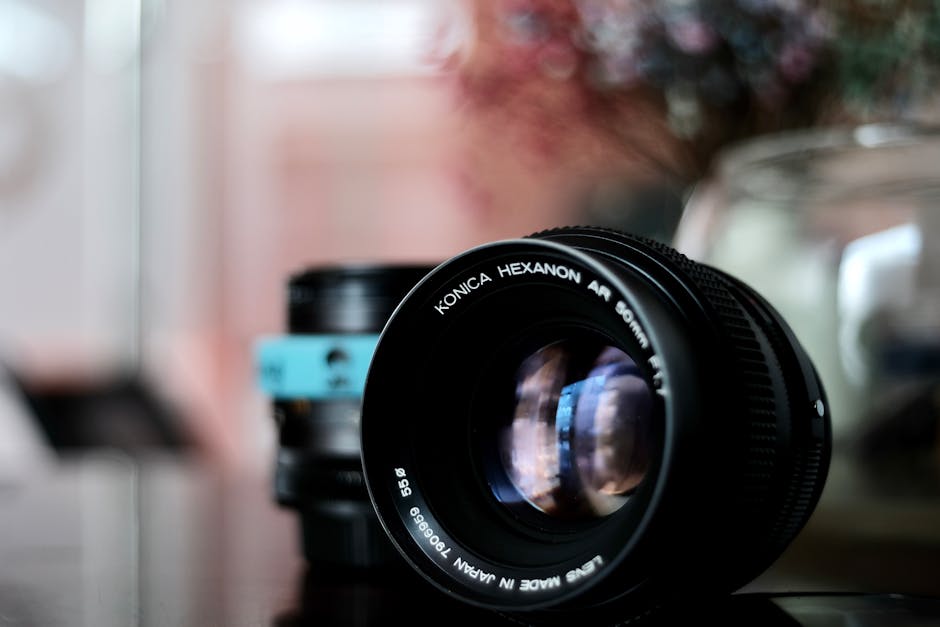
If you’re looking to dive into travel photography with a 50mm and don’t want to spend a fortune, my unequivocal recommendation is the Canon EF 50mm f/1.8 STM. At around $125, it’s an absolute steal. It’s sharp, incredibly lightweight at just 160g, and the STM motor provides quiet, smooth autofocus for video. Yes, it’s plastic, but it’s durable enough for travel. Don’t overthink it; just get it.