

I’ve been a digital nomad for six years. In that time, I’ve owned exactly three backpacks. The first two fell apart within twelve months. The third — a Peak Design 45L — has outlasted both of them combined. But here’s the thing: I bought a Nomatic Travel Bag halfway through that period, and for certain trips, I still reach for it. So which one is actually better for the nomadic lifestyle?
Let me save you the research time. If you’re bouncing between hostels, co-working spaces, and Ryanair seats, one of these bags will serve you well. The other will frustrate you. Here’s everything I’ve learned after dragging both across 23 countries.
The Core Difference: Organization vs. Adaptability
These two bags solve the same problem — fitting your entire life into a carry-on — but they approach it from opposite directions. The Peak Design Travel Backpack 45L ($299.95) treats your gear like camera equipment: modular, protective, and endlessly reconfigurable. The Nomatic Travel Bag ($299.99) treats it like an office: compartmentalized, rigid, and optimized for quick access.
I’ve tested both with the exact same loadout: a 14-inch laptop, two pairs of jeans, three t-shirts, a hoodie, toiletries, a camera body with two lenses, chargers, cables, and a pair of sneakers. Here’s how they handled it.
Peak Design 45L: The Shape-Shifter
The Peak Design uses a clamshell opening with removable dividers. You can configure the interior as one giant cavity (great for a week’s worth of clothes), a padded camera cube (great for photographers), or a mix of both. The key feature is the compression system: two zippered panels on the sides that cinch down your load from 45L to about 30L. I’ve used this to squeeze past gate agents who were strictly enforcing carry-on limits.
Specs that matter: 53 x 33 x 20 cm (expanded), weighs 2.05 kg empty. The laptop sleeve fits up to a 16-inch MacBook Pro. External access pockets are minimal — one small top pocket for sunglasses and a passport, plus two water bottle pockets that are too shallow for a 1L Nalgene.
Nomatic Travel Bag: The Filing Cabinet
The Nomatic opens like a suitcase but with a dozen built-in pockets. There’s a dedicated shoe compartment at the bottom, a dirty laundry pouch, a waterproof pocket for toiletries, and a quick-access top pocket for your phone and wallet. The laptop compartment sits against your back and holds a 15-inch laptop plus a tablet.
Specs: 55 x 35 x 20 cm, weighs 1.9 kg empty. The expandable zipper adds about 5L of space. The water bottle pocket is deep enough for a 1L bottle, but it eats into internal volume when used.
My verdict after 18 months with each: The Peak Design wins for flexibility. I can pack a camera kit one week and a full wardrobe the next. The Nomatic wins for daily access — I never have to dig for my charger or toothbrush. But the Nomatic’s rigid organization means you can’t stuff it full of irregularly shaped items. A rolled-up hoodie fits fine. A bulky drone case? Not so much.
What Breaks First — Real-World Durability Testing
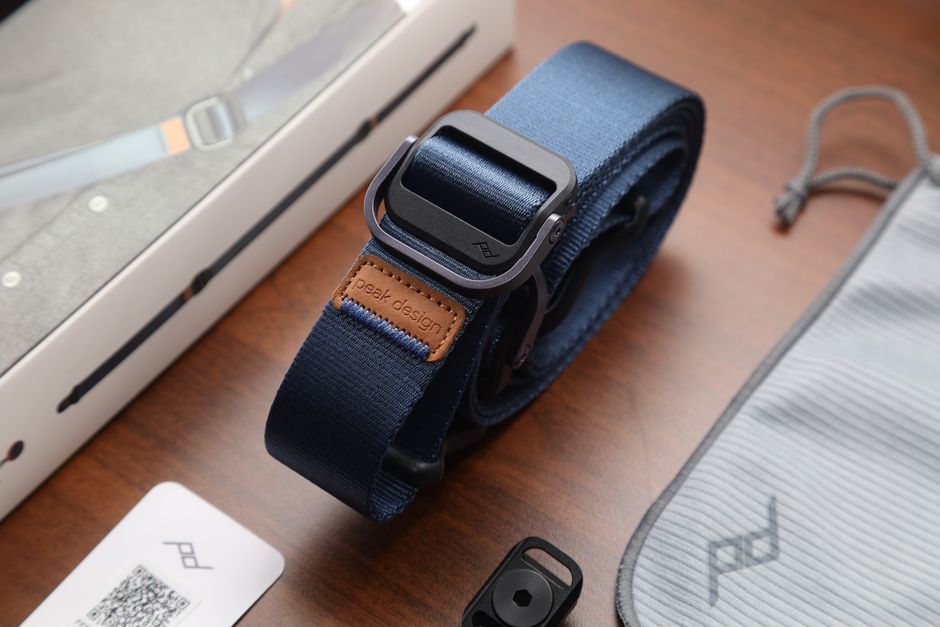
I destroyed two backpacks before I learned what actually matters. The first had a zipper fail in Bangkok. The second had a shoulder strap detach in a Lisbon tram. Here’s how these two held up.
The Peak Design 45L uses #10 YKK zippers with custom pulls. After 4 years of heavy use, mine still glide smoothly. The fabric is 400D nylon canvas with a weatherproof coating. I’ve been caught in monsoons in Chiang Mai and snow in Berlin — the contents stayed dry every time. The only wear I’ve seen is on the corner where I set it down on concrete daily. The padding there has flattened slightly.
The Nomatic Travel Bag uses a 600D TPU-coated nylon. It’s more water-resistant than the Peak Design out of the box — water beads off completely. But the zippers are smaller (#8 YKK) and the pulls are plastic. One of mine cracked after a year. Nomatic replaced it under warranty, but it was a hassle. The shoulder straps also started fraying at the adjustment points after about 18 months.
Failure mode to watch for: The Nomatic’s internal mesh pockets have weak stitching. If you overstuff them with heavy cables or a portable battery, the mesh will tear. I’ve seen this happen to three other nomads. The Peak Design’s dividers use a sturdier nylon mesh that hasn’t failed on anyone I know.
If you need a bag that survives airport tarmac, bus floors, and the occasional motorbike ride, the Peak Design is the safer bet. The Nomatic is fine for city hopping, but I wouldn’t trust it for rugged travel.
Carry-On Compliance: Which One Actually Fits?
This is the single most important question for any nomad. I’ve been denied boarding with a bag that was 2 cm too tall. It’s not worth the risk.
| Airline | Max Carry-On Size (cm) | Peak Design 45L (expanded) | Peak Design 45L (compressed) | Nomatic Travel Bag |
|---|---|---|---|---|
| Ryanair | 40 x 25 x 20 | ❌ Fails | ❌ Fails (too tall) | ❌ Fails |
| EasyJet | 45 x 36 x 20 | ❌ Fails | ⚠️ Borderline | ❌ Fails |
| Delta / United | 56 x 35 x 23 | ✅ Passes | ✅ Passes easily | ✅ Passes |
| Emirates | 55 x 38 x 20 | ✅ Passes | ✅ Passes easily | ✅ Passes |
Critical insight: Neither bag is truly a personal item. If you’re flying Ryanair or EasyJet with only a free under-seat bag, both will get you flagged. The Peak Design at its compressed 30L setting is close — I’ve gotten away with it twice — but it’s not guaranteed. For budget European carriers, you need something smaller like the Osprey Daylite 26+6 ($85) or the Aer Travel Pack 3 Small ($259).
For long-haul flights with proper overhead bins, both bags work. The Peak Design’s compression system gives it an edge: you can expand it to 45L for the flight out, then compress it to 30L for day trips at your destination. The Nomatic doesn’t compress — it’s always the same size.
When You Shouldn’t Buy Either Bag

I’ve recommended both bags to dozens of fellow nomads. About 30% of them ended up returning or selling theirs. Here’s why.
Don’t buy the Peak Design 45L if:
- You’re a minimalist who packs less than 25L. The bag is heavy (2 kg) for its size, and the internal dividers add bulk. You’d be happier with a Goruck GR1 21L ($395) or a Tom Bihn Synapse 25 ($200).
- You need frequent access to your stuff while walking. The Peak Design’s external pockets are terrible. You have to take the bag off to reach anything in the main compartment.
- You’re on a tight budget. $300 is steep for a backpack. The Osprey Farpoint 40 ($190) is almost as good for half the price.
Don’t buy the Nomatic Travel Bag if:
- You carry camera gear or bulky electronics. The rigid internal layout doesn’t adapt well. My Sony A7III with a 24-70mm lens barely fit in the main compartment.
- You want a bag that lasts 5+ years. The zippers and stitching are the weak points. Two of my friends have had warranty claims within the first year.
- You hate bags that look like tactical gear. The Nomatic is aggressively utilitarian — black nylon, lots of straps, very urban. It stands out in a rustic hostel.
Alternative worth considering: The Aer Travel Pack 3 ($259) splits the difference. It has the organization of the Nomatic with the build quality closer to the Peak Design. It’s also 35L, which means it fits more airlines. I switched to it for my last six months in Southeast Asia and haven’t looked back.
The One Thing That Decides It
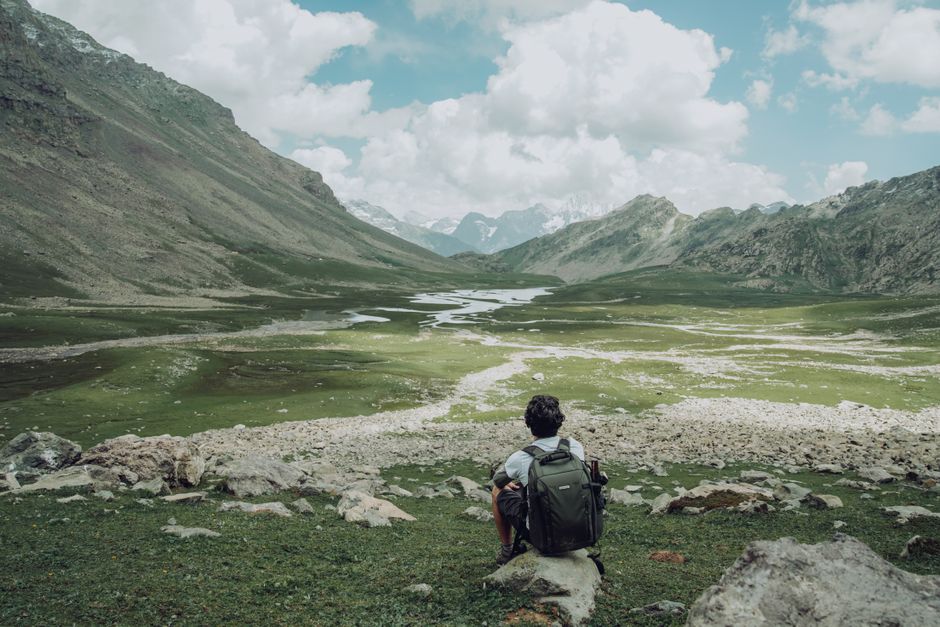
After 23 countries and six years of living out of a backpack, here’s the only question that matters: what do you carry?
If your loadout is primarily clothes and a laptop — you’re a writer, a developer, a remote consultant — the Nomatic’s organization makes your daily life smoother. You’ll never lose your charger, your passport has a dedicated slot, and the shoe compartment keeps your sneakers off your clean shirts.
If your loadout includes camera gear, a drone, a portable monitor, or anything that doesn’t fold neatly — you’re a photographer, a videographer, a creator — the Peak Design’s modular interior is the only choice that makes sense. You can reconfigure it for a shoot one day and a hiking trip the next. The Nomatic will frustrate you every time you try to fit a lens in a pocket designed for a cable.
I own both. I use the Peak Design 45L for 80% of my trips. The Nomatic sits in storage and comes out only for short city breaks where I know I won’t need to repack. If I could only keep one, it’s the Peak Design without hesitation.